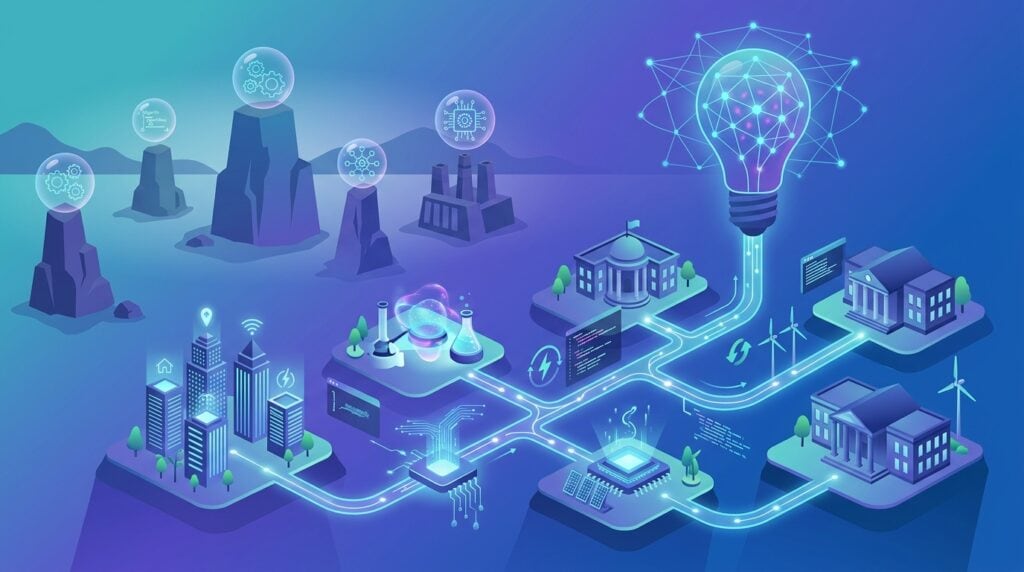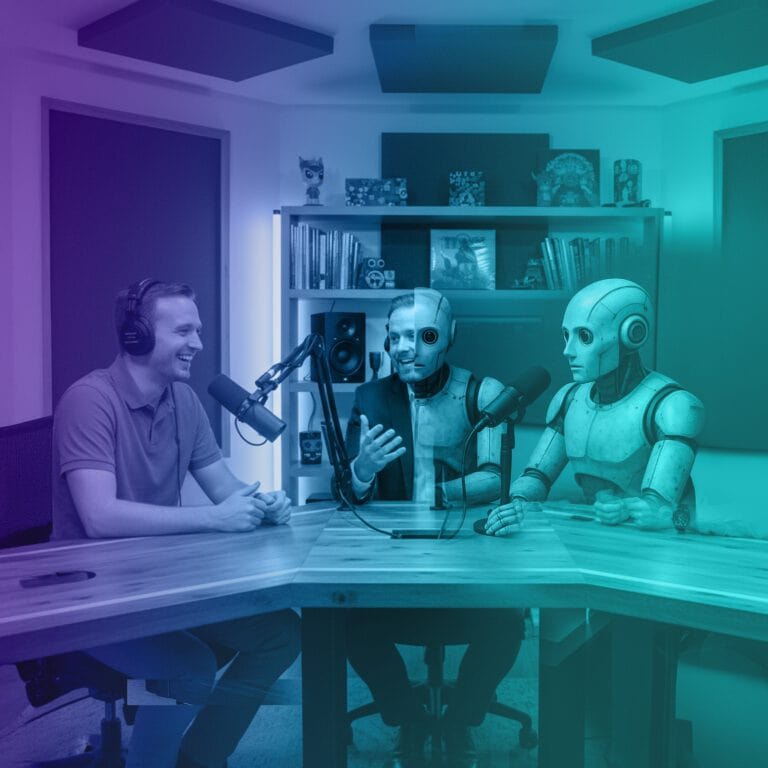
While AI offers incredible efficiency, what are the hidden dangers for ministry? Luke is joined by Eric Louw and Emmanuel Higgins for a crucial conversation about the risks and rewards of AI.
This episode provides a balanced, thoughtful framework for engaging with AI responsibly.
~
If you have an idea for an episode on the Blue Vineyard Podcast, contact us at [email protected]
Do you offer services in the Adventist Ecosystem? Connect with us on LinkedIn
Or, perhaps you need some digital services. Find out more by visiting our website now. bluevineyard.com
Episode transcript 9,060 words
Welcome to the Blue Vignette podcast where we explore the Adventist digital ecosystem. My name is Luke Frugger. I'm the co-founder of Blue Vignette and I'll be your host. In each episode, we will sit down with different leaders from the ministry and technology worlds to see their insights, hear inspiring stories and get their hard-earned wisdom for future ministry leaders to use.
On today's episode, we have two people. We have Emmanuel Higgins and Eric Liu. Emmanuel is a software engineer and he's the founder of the Advent AI platform. Eric is a PhD student, pastor, AI educator, and graphic designer.
In this episode we talk about the ministry usage of AI, what it looks like in the future, how to mitigate AI risks, and what the landscape could look like as we move further into the future. I know you will enjoy it just as much as I enjoyed recording it, so without further ado here is the episode. Hi, everyone. Welcome back to the Blue Vineyard podcast.
My name is Luke Farooja. And today I've got two special guests with me. I have Eric Liu and I have Emmanuel Higgins. Welcome to the show, guys.
Thanks, Luke. Thank you. Just to just to start us off, because your names are very familiar to perhaps a lot of people that are in the technology part of Adventism. But for those of you who perhaps haven't seen your names around on the Internet, maybe if I could get you to introduce yourselves just a little bit of the qualification, the why you're here and who you are.
So maybe if I could start with you, Eric. Sure. Yeah. So I started out in computers and IT growing up.
I started a degree in that, eventually did graphic design. But I kind of wish now with the AI boom that I'd stuck it out with computer engineering and computer science. But that's always been a hobby, so I've kept it on. I ended up switching to theology after graduating from graphic design.
I was a pastor for a little under a decade. And now I'm doing a PhD in adventure studies. So I've been all over the place in my studies and the places I've lived. but really enjoying it. I'm in Berrien Springs, Michigan at Andrews University.
Nice. You mentioned having been all over the place. Out of all of the places that you've lived from like a lifestyle perspective, what's your favorite place that you've ever lived? Well, I would probably say Chattanooga, Tennessee area.
My wife is from Australia and the time that I've spent there, I haven't lived there, but the time I spent there has been wonderful. So I have to say I'm a little bit partial to that as well. Well, I may be biased, but I would agree with that. Emmanuel, can you share a little bit?
Yeah, sure. So currently I'm working in software engineering and I've been doing that in like a corporate space for about four years. Prior to that I was like doing freelance development for many years part-time the freelance development and part-time ministry literature evangelism youth ministry and Did a lot with media production and design different forms of multimedia desktop publishing Yeah, I love technology and I just love the the ability that we have today to to have a really big impact from your own, from your home office through technology. It's pretty amazing.
What we can do with technology today, it would have required like a team of 20 people and the backing of a million dollars even 20 years ago, right? It's just been such a different time in Earth's history. And I think, you know, perhaps just setting the scene a little bit for where we're going to go in this conversation. The reason that I wanted to have both of you on the show is because we I don't seem to be able to have a conversation with anybody that doesn't include something about AI in in the church technology landscape right now.
And as this is something that I've been playing with from like the early in the adoption curve, I've been watching both of you as people who have been further ahead of me who are getting exposed to these things, playing with them, utilizing them in interesting ways. And as this podcast is really squarely aimed at that Adventist community for administrators, for ministry leaders to be able to grow in those areas, I'm hearing people have questions a lot of the time. And so I thought if we can explore some of those now, that might be an enjoyable thing. But just to maybe just to start us off, if you could if you guys could share, be curious.
How are you currently using AI to improve your daily life and whatever that might mean, whatever that might look like? Yeah, sure. Well, in software development, obviously using AI a lot to basically replace Google search for me. I used to Google search all the time because you don't memorize all your software syntax and all the ins and outs of what you need to know and just having a a large language model to just query very quickly is very useful.
There's a lot of hype as well out there, so I don't use AI as much as you might think if you're reading some of the headlines, like, you know, AI is replacing software developers and all this. It's not really, but still very, very useful. That's probably really how I use it, but I want to leave. If you were to put a percentage on it, how much more efficient are you or effective are you in development with AI versus without AI?
That's a really, really good question. When I started when I started first using AI tools, I would have said, you know, maybe 30% more efficient. That's been what we're talking about in our in our company. But let's come down a little bit.
To be honest, I'm not actually relying on it quite as much. This time there's. There's areas where AI is super powerful and it'll save me. It'll take like a two hour task down to like a 15 minute task.
There's times like that where it's just amazing. It's like, so good. There are other times where I just could grab my old fashioned code editor that doesn't have really AI in it and just need to focus on a difficult problem. And I sometimes, I was not so good at those.
So it depends what kind of task you're doing. It certainly can have the big savings. uh at times which is makes the job more pleasant yep definitely so what about you eric how are you using ai on your day today oh man maybe the better question is how am i not using ai um so yeah i've i've been trying to keep track of all the ways i use it i think i'm up to like between 80 and 100 different uses right now um but i mean just this week uh so i'm i'm in my my um comprehensive exam preparation phase and a lot of research and study work in my PhD. And so I'm using a lot right now for finding information that I've read, synthesizing, and then I have to write up a lot of outlines. So I have to do a lot of the writing, of course, but I'm using it as a research assistant to the nth degree.
So for me, I'm finding a few tools very useful for that. I'm mostly using it for propositional logic. So just yesterday I was trying to use it to create some like truth tables and propositional outlines of some arguments, um, just to understand better the logical sequence of it. And it does remarkably well at just processing information, reformatting information.
Um, another thing that I do constantly is I work with a lot of spreadsheet related things and formulas and man, it just makes it easy. Like I have a formula that's like probably a meter long, just code of that formula. And it's horribly inefficient. And I'm sure AI has done a terrible job at it, but it works.
So I'm quite happy with that. So yeah, I'm using it in many different ways. If I was still pastoring right now, I can only imagine how much it would help me from visitation to small group preparation. There'd be just so many ways that I'd be using it.
Yeah, that's very cool in my life. It's interesting because like we're in three very different spaces. Obviously, Emmanuel sitting very squarely in that code engineering space. Eric, you in academia doing that, me in business, like the ways that I'm using it primarily in a couple of ways are like the biggest time savers for me.
One is that when I have a conversation with somebody, especially with a client or something like that, and I need to write a proposal, I use one tool for transcription, which does a really, really nice job of it. And so that, and so I use Mac whisperer. I just turn that on and I'll sit here and I'll talk about the conversation that I had, what I thought was interesting about it. And the main points that I think I would like to have in the proposal.
And then I'll like give any extra context that I, that I want. And then I'll get, um, you know, chat, GPT to turn that into a proposal, which I then will go in and then rewrite or edit myself until I'm happy with it. But that turns a maybe a three hour process sometimes into a one hour process or something like that. So it's really effective.
And then I use it for the smaller things too. Like someone sent me a screenshot of a spreadsheet and I needed to bring that spreadsheet into something else. And in the past you would either like, you know, you can, I know you can copy and paste from screenshots, but like now I just dropped it into chat GPT and said, write this into a table. And then I just copied the table into the document and I didn't have to do anything.
You know, just simple things like that. I just save so much time on that data entry side, right? For sure. Yeah.
So, okay. So that's interesting. But how would you describe, because as I said before, you guys are on that leading edge of how people that are in the Adventist system are using this stuff. How would you describe the current posture of the church as a whole towards AI?
Oh, man. I think it depends where you are. I've seen a little bit of everything. So being at the seminary, I'm around a lot of pastors.
I'm around a lot of students. So yeah, it just varies so much. I can tell you how schools are taking it and it varies a lot. I think that as a whole, schools are beginning to adopt it.
There was a bit of a brief phase near the beginning where people were cautious and how is this going to impact things. And now I think it's gone to the place where we're embracing the inevitable, but then also realizing how many people are cheating with it or misusing it. I can only imagine people are writing sermons with it for their preaching classes and things and probably getting caught out in the midst of it. But yeah, I think it's a mixed bag for that reason.
I think a lot of people in the church are saying, wow, how can this save us time? And they're maybe imagining it can do more than is maybe practical right away. And then there's others who are Hesitant. Yeah.
Yeah, I think that adoption curve, right? You know, the that concept of the tipping point, like I don't think we're there yet, but I feel like we're getting we're getting a lot closer to that. There's a lot of more people that are willing to think of it as a tool rather than as a problem. And that's I think that's even representative in in culture as well.
Like I was having this conversation on another podcast that I run. Actually, we were making the observation that AI for millennials is seen as an assistant, whereas for Gen Z, it's seen as a counselor, like someone that's your peer that you're journeying with. And it's become a lot more intertwined, I guess, in the younger generations. And it makes me wonder how that will pan out as we progress through and people get older and take different positions of leadership.
But yeah, it will be interesting. So in ministry, because obviously a lot of the people who are listening to this, and when I say ministry, I mean that in the broader context, right? In the church world. So church organizations, church schools, universities, hospitals, whatever.
In our church community, what do you see as the greatest opportunities for AI? Who are the people or where in those structures should we be looking at AI and using it in a different way? I think In our Avanist Church at different levels, we have a lot of unique domains and knowledge. I know a lot of people, a lot of different people around the world in the Avanist Church are trying to build AI tools for our Avanist domain and for different areas in our Avanist domain.
I think that's the biggest opportunity. You've got chat GPT and other tools that are just generic. They're not. they're not engineered for a specific domain, they're just like a cover everything and they're very useful for a lot of things. But yeah, we have a huge opportunity to build tools that are really built on top of our Adventist knowledge and Adventist domain, whether that's just something evangelist specific or evangelism or that's something specific for like Adventist theology or study.
I think there's a lot of opportunity there. I think that it really depends on where one is. If I'm a pastor and I'm pastoring, as I said earlier, there's so many places I'd use it. I'd use it for so many illustrations, like visual illustrations and imagery.
I mean, that's just a no brainer. It's gotten much, much better at that to where sometimes you can't even tell the difference. I would use it for media and content production in so many ways. In fact, I've used it for that, for so many videos doing all the tagging and all the descriptions and the summarizing the videos to get a catchy description and find the right clip that's got just the right hook to get people in the ads.
I mean, there's just so many ways you can use it in media ministry. But yeah, I mean. There's legitimate ways to use it and there's always illegitimate ways to use it that could end up hindering ministry as well. But by and large, I think that there's just a lot of potential for ministry, evangelism, preaching, teaching, you name it.
Yeah. Yeah. I think where in the ministry in general, resources are almost always a constraint, right? It's something we're not, you know, super wealthy churches where we can just do whatever we want.
And so if we can find ways for, you know, five people to have the impact of 15 people that, you know, that has a measurable difference on the outcomes. And I think there's a big part of that. I think we should be looking for anywhere that there is repetitive work getting done, like time consuming, repetitive work. I think that is the best place possible to be using AI.
I think there's a good argument to be. had for real human innovation and creativity being important. I think that's absolutely essential, but I think that we should be automating everything else, like anything that doesn't allow us to have that unique input. I mean, just case in point, I used to spend ages creating outlines for small groups. Now, I would still do that myself, but there's a lot of areas that I can help with in that process.
Like for example, I'm just linking things. I can get a full study guide. I can throw that into AR and it will hyperlink every single Bible reference in it for me, or it will just put in all the texts for me. So I don't have to necessarily go into Logos or, I mean, there's just many ways that you can use it.
That just, it saves time doing the little niggly things that we're just a hassle. But yeah, the risk of course is always, are you going to outsource your brain? And that's where you have to make those trade-offs and make those hard decisions. You know, where do I want to prioritize the benefits of speed and where do I want to run into perhaps some of the challenges of having something that may not know where I want to go, do it for me.
I'd like to go deeper into that to talk more about the risks. Because one of the things you said there that just triggered a thought for me was that I really think that one of the ways that I like to use AI, and I feel like it's probably one of the better uses of it in that creative space, is that I like to use it as a tool to stimulate my creativity and my thinking. So I want to actually give credit where it's due. Dave Brown, my business partner, He suggested using it this way and I found it to be really helpful where you give it the idea or the thing that you're working on and your thoughts on it and you ask it to question your or identify your assumptions and question those assumptions.
And then that forces you to then go back and rethink and you start spotting blind spots in your own thinking. then you end up with something way more robust than what you had at the beginning. And I think that's an excellent use of AI because that's stimulating my own capacity to think critically. But I'm also not outsourcing my brain to, you know, allow it to just spit out, you know, AI, AI slop. you know, hope for the best. So I did that today.
So I was having a discussion with a friend on the Trinity. So I wrote up my response and then I threw it in AI and I said, Hey, shoot this, shoot this full of holes. Like where, where are all the holes in what I'm trying to say? And it identified some issues that I needed to tackle before I posted the response and texted it to him.
And that was helpful because otherwise, you know, people take advantage of the holes in your logic and reasoning sometimes. And that's just one area that I avoided a minefield, so to speak, by forcing myself to think harder about something that I'd had an oversight on. Yeah. So, you know, you use the expression, you know, outsourcing our own brains.
And so let's talk a little bit about the risks because, you know, I don't know if you guys, if you guys saw it, I watched a, a, an episode of, um, the diary of a CEO podcast, and he had two psychologists, Dr. Amen, and I can't remember the other guy's name, but they were talking about the effect of on brains of using AI. And they were talking about this difference of you can use it in a way that is helpful from a cognitive perspective, and you can use it in a way that actually just makes you dumber. And so I found that to be a really interesting discussion.
But there's a lot of different ways that we could look at the risks of AI. You know, there's like the ethical side of it. There's social, there's theological, there's psychological. But like, what are the biggest risks from both of your perspectives?
Like, what do you think are the biggest risks that we need to be on the lookout for? And if you have any thoughts, what can we do about them? There's a lot of risks. I think one of the risks is that we misunderstand what AI is capable of.
And if you just read the headlines out there, there's a lot of hype. And you think, oh, AI is just an amazing thing, it'll do everything. It is amazing, and sometimes it's like magical, you know, it really is. But it's also sometimes absolutely terrible.
It really depends on how you use it, the context it's used in, and what you use it for. So one of the risks is that we misuse it or we trust it too much. or we have the wrong expectation of what it's capable of and what it can do in a certain context or a certain problem or however you're trying to apply it. AI is amazing in some things and not very good at other things because we know AI can hallucinate. That's kind of a bias from the way that these models are trained that it might be correct 90% of the time. or not even 95% of the time, but that other five or 10% of the time, it can be very confidently wrong.
So if you're using AI in a domain that you're not very familiar with yourself, it can be hard for you to pick up on when it's wrong. If you're able, when you're using AI, to tell when it's incorrect, like if you're, and what I mean, if you're writing code, it's usually... you can you can tell I was just making this up. I know that that syntax isn't correct. I know that that that's not right.
But it can be a bit harder sometimes. So that's where we've still got to take on some cognitive load when we're using AI and think about what we're asking it, what it's giving us back and not just relying on it entirely. You know the way we talked about Uh, you know, the conversation about social media, when that was the big new thing, we talked about that creating echo chambers, right? Ideological echo chambers that radicalizes people in whatever area they happen to already exist.
Um, I think there's a, I think there's an argument for AI being even worse because it reads your bias and then it speaks into your bias. Right. Um, and so I, I wonder, I don't know what the answer to that is because the people that are making these models, they're predisposing them to be as useful as possible and as likable as possible by the people that are using them. How do you think we fix that or guide against that at a societal level?
Oh, man, I think that's a complex question for multiple reasons. But maybe one of them is just that I'll give AI an argument, for example, and I'll say, hey, you know, critique this. And initially, If I, if I don't really try to bias it against me, it will agree with me. It will tend to just steer completely towards my biases.
And I think that that's a risk because it will tend to reinforce things we already know. Now that's not always the case, but certainly that can be the case across political divides, across religious divides. I mean, I've had debates with it on theological topics like when is the Sabbath, right? I'm sure many people have.
And sometimes, you know, if it is taking a different perspective, it can push pretty hard on that. And so I think that this can be shown to influence. There was a study some time back that actually caused a lot of controversy. Someone used an AR bot on Reddit to convince people.
And it was used, I think, on the debate subreddits or one of these. And they found that it did basically better than humans at changing people's beliefs. And so right there we have what was probably an ethical misuse to some extent, but you know, it's a public network. So I don't feel like it was that bad, but usually in a study you need to disclose what's happening.
So yeah, like this, there's some issues there and it was notably able to change people's perspectives. So what is, what's happening on social media? You know, how many fake accounts are out there that are putting out content that persuading people to have completely different perspectives than they had before. Yeah, that that's I mean, from a religious liberty perspective, that is scary, right?
Like that's that's terrifying, because you look at the the user numbers for some of these large language models. If that model, let's say has somebody that is setting the course and you know, like what effect does that have at a global level, right? Like, I mean, I think you would generally find the kind of people who use Gemini are typically quite different to the people who use Grok. Right.
You know, and I wonder like what that what the net effect of that is, you know, at the at the macro scale. And it's so subtle too. Like I was going through and I was trying to get a biography of an individual this last week. And it gave me the whole biography and then added a few details.
And I got to that point, I was like, man, I know the story pretty well. Like those last two don't line up. I was using notebook LM. So it was using the sources directly.
So I checked the sources. it was misinterpreting the, the syntax of the sentences to say something completely different. So it's not that it was necessarily hallucinating. It was actually understanding the content in a way that the context itself did not necessarily allow for. And that's not something that I'm sure a large language model can overcome because interpretation is something that even with the smartest people varies.
Now you would think that it could look at the context and say, Hey, you know, like this is, these are all the contextual cues. This is what this really means, but it doesn't always. So maybe there is some hallucination in there, but I feel like in that case, in some of those cases that I was observing that it was just struggling to interpret. What were you going to say, Emmanuel?
Yeah, I was going to say, um, when we understand that AI and these larger language models are effectively word predictors. Given a sequence of words, it's very good at predicting what most likely the next word's going to be. It just keeps predicting that and builds out your paragraphs and sentences and everything else. Understanding that, it's a lot harder for the AI to go from a negative to flip the script.
I think I've mentioned, can I go against this point or whatever? It's just the algorithmic nature of it. If you ask it a leading sort of a question, it'll almost always take the bait because that's just how the statistical nature of that word prediction goes. It's more likely going to take what you've said and expand on it rather than take what you said and tell you that it's wrong and go to the opposite.
In order for it to come to an opposite point to what you've said to it, it needs to have either be trained in that sort of specific, for that specific scenario, or there needs to be some context engineering that's providing the AI with a context that's different to the question you're asking. So when you ask your questions, if you're using a generic tool like ChatGBT, you've got to realise the AI is probably going to say whatever you want it to say. So flip the script yourself, change up your question, ask it from a different perspective, ask the opposite and get get different sides of the coin really yeah utilize um make the tool work for you like that and understand it's um its limitations is really important if if i just build on that you bring up an excellent point there manuel uh something people don't realize is that large language models um do not have negative prompting in the in the same sense as uh some people involved in image generation models would be more aware of so with image generation you can say you know i want to see you know, a boat, but I don't want to see water and you can actually have a negative prompt where it will actually subtract that aspect of the neural net and it won't go there or it'll remove it. Whereas with large language models, if you say, you know, show me a write up, you know, something on a certain topic and don't talk about this, the moment you say don't, like we assume in language that it would just not do that.
But now you're saying you like don't. And if you say don't, whatever comes after that, still reference the neural net of the AI. And so you're saying, okay, you know, tell me. uh, when, when is the Sabbath and don't rely on any Adventist theology, right? Well, the moment you said Adventist theology, it's now accessing the part of the neural net that has Adventist theology.
It doesn't respect the don't. And so it's much better to say, okay, you know, from a Calvinistic perspective, you know, elaborate on the Sabbath or something and just exclude whatever it is from even the prompt so that it doesn't even go there. And that's what people are realizing is there are constantly they'll engage with the AI, it'll say some crazy things, and they'll not realize that they're the ones that actually prompted that. They took it there because they said don't, and they expected their negative prompt to subtract something that it wasn't capable of actually doing.
It's like that old thing of, you know, if you say to someone, whatever you do, don't think about a pink elephant, right? What you've done is you've created a situation where they can do nothing else, because that's how the brain works. Did you guys see, I'm sure you did, did you guys see that research paper that was put out by some of the researchers from Apple about the actual reasoning ability of large language models? Yeah.
I thought that was really interesting because the findings, and correct me if I'm wrong here, it's been a while since I looked at it, but as I recall, the findings were essentially that... As soon as you give it a question or ask it to respond in a way where you're not giving it any cues and you're actually forcing it to do actual reasoning and not just word prediction, it basically fails catastrophically every single time. And I thought that was really interesting because we think about it as the media hype is saying it's getting better and it's going to be sentient soon or it already is or whatever. As soon as you actually make it reason, it fails.
I think within a few days of that, though, there was a rebuttal. I don't remember if it was from Anthropic or where exactly it was from. I feel like it was maybe Anthropic. But there were some methodological issues there.
When people tried to repeat the same process, they were able to actually get it to produce new content. And this is actually a challenge. Because on the one hand, it's absolutely true that large language models are based on predictions and training data. And yet at the same time, large language models are being used to help create new materials and helping chemistry and these other things.
In fact, just today I saw an article, I skimmed it, I didn't read it unfortunately. But the headline was essentially that an AI had solved a new math problem that had never been solved before. And so it had gone through and it actually created and come to something that granted relied on formulaic laws, so to speak, being math and whatnot. But nonetheless, it was able to come to something new.
And so I think there's this balance where on the one hand, yes, absolutely, it's predictive, it's fallible, it doesn't go very far beyond its training data. And yet at the same time, when it comes to how it applies the laws of physics, mathematics, programming languages, it is possible that it can also produce something new. And I don't fully understand all the details of that, but I understand enough to know that it does work a lot of the time. What do you think about the claims of of us getting to AGI at some point?
And I'm not talking about sentience. I don't think there's ever an argument for it being a being. But as far as getting it to the place where it is. at that human level of intelligence. What do you think about that?
Do you think that's possible? It depends very much what you mean by AGI and how you define that. Like large language models already are smarter than people in narrow ways. I don't have an encyclopedia loaded into my head.
I can't give you an instant answer on a million different topics. But then I'm much smarter than AI in many, many ways. So that term is a bit hard to define. It will replace jobs in the next two years and we're seeing more of these models getting put into robotics which are going to make for some pretty smart robotics and they'll be able to do a lot of things.
How do you think that will play out? Because I think what we already have, if we were able to get the robotics portion of it where you got fine motor skills and those kinds of things. You can then have theoretically, if the robot is capable of what a human body is capable of, then you have the ability for them to do any skilled labor in the world. Essentially, it's like the new slavery.
A one-time investment and you've got something that will work for you indefinitely. How do you think, and I know this is way above the pay grade of all of us here in this conversation, but how do you think that will affect the world? Oh, I think it's going to change everything. I think it's going to take a while to get there.
It'll probably be another five years or so before things are a bit more ubiquitous. But I mean, the thing of it is, is that you can take a robot, right, and you can run a simulation a thousand times, tens of thousands of times of it doing something in virtual space. And now it's learned how to, you know, cook a meal. do dishes, do laundry. I watched a video the other day of a robot folding laundry and I was like, wow, finally we're getting somewhere useful, right?
So like, yeah, like the potential there is huge. Is it going to be cheap? No, it's going to be the biggest corporations that start with it, where they can save costs. But I mean, think of it, if you would hire someone to do something for 40, 50, $60,000 a year, Invest in a robot one year and now you've got something that lost you, you know, five years more or less, who knows?
Yeah, it's certainly an investment and I don't know what business wouldn't want to do that if they could stand to save an awful lot of money Now will people like that? No, I'm not sure I would like that. Oh I think it's gonna revolutionize the world in major ways Like up until a couple of years ago robotics was was stagnating a bit But all of a sudden, all these big companies had a eureka moment and gone, these large language models are going to unlock capabilities in robotics that are just insane. And now there's a huge amount of money, a huge amount of money being invested by dozens of companies into robotics.
And in five or 10 years time, we're going to have, most likely, a personal robot to be as common as a car and be able to do a lot of things. There's this idea of a wealth gap, right? Do you think that's going to exacerbate that? Because the first people that are going to be able to afford this are going to be the people who are doing all the hiring, right?
And so they're going to be still making money, but the people that they were hiring previously will no longer be making the money. So the poorer classes will get poorer, the richer classes will get richer. And even the richer classes who depend on the poorer classes paying for their services or products There's going to be a limit to how much they can make, right? Because their customers are going to go away.
So I guess what I'm seeing is that at some point there will be this level of disparity where it will socially or politically be really destabilizing. Because what do you do when you have millions of people in large countries who can't get jobs because the robots have the jobs, right? they can either legislate against it or risk revolution of some kind. I don't know what that's going to look like. It's a lot more likely than some super intelligent takeover.
There was an article I saw just today from Jeffrey Hinton, the godfather of AI, so to speak, and he was saying that capitalism will funnel AI's gains to a small elite while leaving the majority worse off. And I think that's the case, absolutely, because, I mean, obviously, those who are rich are going to become way more rich because they can afford to, you know, pay for the robotics and everything else to change their bottom lines. And then for a lot of other people, I mean, we look at AI and we think, oh, you know, that's not so hard to get into. But there is actually a significant barrier of barrier to entry here.
It doesn't take overnight to learn. You can begin learning overnight, and then another night and another night. I mean, for me to get to the level of experience I've had with AR and the types of prompts I'm writing has, honestly, I don't think I could have done it in less than the four years that I've spent on it. Maybe if I did like, you know, a college course on it, I could get, you know, 50% of the way there, but there's just so much that you learn.
Those courses are going to be outdated, right? But by the time you finish the course, they'd have to write a new one because it's moving so fast. Actually, yes. This last January, I did one A course for pastors on called a alpha pastors.
I did it with Justin coup It's on for those who are interested. It's actually on Adventist learning community, which is a website of the NAD free for anyone to look at We did this in January Yeah, like the principles are still relevant. The tools are still relevant But if we were to redo it now like there are so many new tools that we would probably discuss and add on so yeah as good as a primer, but Yeah, this technology is moving so fast. Things look different.
So as a church, what like how do we respond to that? Is that like how do we treat that as opportunity? Because I mean, I would love I would love it if there was a way for us to, you know, take AI safety at an economic level more seriously globally. I wish that there was a way to do that.
I personally I can't see a future. where we can align all of the global progress in such a way so as we can do it intelligently. I don't think that's possible. So as a church then, how do we respond to that? I think we need to embrace it and capitalize on it and utilize it to the max.
Look for ways. How can we apply AI to the ways that we communicate as a church? Be a powerful use. How we can reach new people.
Communicate our message. I think the more that people start using it now and familiarizing themselves with how things work, the better it'll be. Because I mean, this is not like the internet boom. This is far more rapid than that.
This is not like the computer boom. Like, you know, if you were using a fax machine yesterday and then, you know, the computer was invented and came to where it is today, like, that's kind of the speed that AI is going. Like, people are gonna be swept off their feet so quickly. because they're just not relevant anymore. And this is the worry people have.
And I think it's irrelevant to worry because quite honestly, do I want to have, you know, a secretary or an executive assistant that is, you know, typing out notes and minutes in meetings, when I could just have an AR summarize the whole thing, give all the action items and do that in less than 10 seconds flat? Like, what's the point of an assistant now? So, yeah, it's changing a lot and we need to keep up. That rapid innovation I think is really the moment in integrations and niche products built around AIs.
The core intelligence itself, the AR models, I feel like is actually plateauing a little bit at the moment. We're not seeing as rapid jumps like a couple of years ago. We see these massive leaps in intelligence. Now it's small incremental improvements, unless there's a fundamental change in how these things are getting built, the infrastructure.
They're not going to majorly, the intelligence, we're not gonna see any major intelligence jumps again in the near future, but we will see things revolutionise industries as, because to implement these technologies, still catching up, we're still finding out how to integrate them into our workflows in the real world. That's where there's still a huge amount of innovation going on. And that's as a church, we need to look for ways. to integrate this technology into our mission. Yeah, I think if AI were to progress no further, it has already changed the world.
And just having people learn, if just the next generation learns how to use it to its full capacity, that is already irreversible. There's already 1,000% advancement right there. Because I can do tasks that used to take me 10 hours in a few minutes now. So like that is a huge difference.
And yeah, people saying, is AGR coming? Is it coming or not? Yeah, some fields that might be, some it might not be. But the reality is that just for the practical use that you can use it for in so many different fields, it's adaptable.
There's something relevant to everyone. And the problem that I face the most is just people not thinking carefully, how could I use this to change XYZ? You know, people just sitting down and saying, you know, could I use AR for this problem and how would I use it in that way? I mean, if you're not even sure how to do that, just ask the AR and it will tell you how you could use it.
You don't even have to be that creative. But people aren't thinking in that way. They're just thinking, oh, well, you know, I've got to do this and there's just no way around it. And so they give up.
And so really the limit in many ways is actually ourselves. It's a user problem and a lack of creativity. And I think that That is really the biggest limiter right now. Even though AI has plateau, I would agree with that.
It's a person problem at this point. But that said, let me add one other thing. It is amazing to me that there have been some huge improvements recently in memory and the ability to have an AI remember all past conversations, much larger context windows. And I was looking at something the other day, I forget where it was, but it was just this idea of how the AI model was built now.
It was a new paper proposing a way that it could work with basically using the equivalent of what we would refer to as short and long term memory. But then also the different parts of our brain using different ways of thinking, and they were trying to replicate this in the AR model. And when they did, they found that suddenly it performed this much better by those metrics. And so I think that's just really cool that the more we look at what we have in our own minds and model things off of what God has created, we're starting to see crazy things happen out there as well in advancements as well.
So maybe the limitations we're running into are people not going back to looking at how we work enough and just trying to brute force other methods. Yeah. So I think there's a couple of things that I want to go. I want to go one more place before we wrap up today.
But I think just in summary, what I'm hearing from you guys in this discussion is that as a church, we need to do a better job of education. If the people aren't using it well, then we're actually missing out. There's already so much innovation that's been done and we are not benefiting from it as a church enough. And so there's that education piece is a massive thing that we can do in the short term.
In the medium to long term, there are risks involved with how this is going to affect in a macroeconomics perspective. As a church, what that does is that puts us in a position where there's more ministry to be done, right? You know, the people that are displaced are affected by that. We can minister to those people.
The problems that this is going to create, and I'm not saying that we should be happy these problems are occurring, but if we're preempting them, right, people are becoming... more and more reliant on AI. Maybe our evangelism should be focused around how do we help people to live better lives with AI that increases their cognitive capacity into old age. How do we help prevent dementia by stimulating these things? How can we use AI to improve? how things work.
So I think there's opportunities on the technical side, but there's also opportunities on the humanities side for us to do ministry and do more good in the world that's around us. So what I did want to ask, just as I said, just as we're wrapping up for a practical response from both of you, I love the fact that our discussion so far has been fairly well platform agnostic, right? We've mentioned some tools, but we haven't made our conversation specific on this tool or this tool or this tool. Because that changes, right?
So, and so this is good. This conversation will be more timeless than a lot of other AI conversations out there. But if you guys could point out, like, what are your top recommendations, the top few tools that you think people may not have heard of. So obviously, I think everyone has heard of ChatGBT.
They've heard of like some of these big ones. But what would you say like the top two or three things that maybe people haven't heard of that they should be taking a look at to make their lives better? Yeah, I have a long list of these. So I'll keep it short.
If anyone wants the full list, they can go to adventailab.com, where I have a ton of comparisons. So something I do is I compare apps. And probably the top two apps that, let me give top three. You mentioned one of them earlier was MacWhisper.
That is tremendous tool. But the two that I use most right now, one of them would be Alter. It's AlterHQ.com. This is a tool that actually is one of the only tools that you can pay for now.
Unfortunately, it's Mac only. But it's one of the only tools you can pay for right now that will give you a lifetime plan with API access to 50 different AR models. It's a little bit pricey, but if you do that, they give you a very reasonable daily limit. I've never hit it, and I'm just using it constantly.
It has built-in dictation. It has built-in actions on your system. So I can basically be in my email, and I can just say, Look at the context and reply to it and I can dictate that and it will just go in and will reply to my email for me So it's like it's it's Probably one of the more advanced tools that I've come across It's got a little ways to go still before it's like fully, you know automated and agentic so to speak but That just saves me hours every day. So that's one another one that's really useful and quite polished as well as super whisper It's another fun tool.
It's also got a lifetime tier, actually. And both of these are just really polished, decent tools that you can use to speed up what you're doing. It even works on, I think, iPhone and Android. And so you can just be like dictating to it, and you can tell it to change whatever you set into whatever format you want.
It's a pretty cool tool. So those are two that I enjoy a lot. The third I would just say is Notebook LM is very underrated. It is quite useful for using as a second brain, I'm constantly flipping between notebook LM and perplexity for web searches and stuff like that.
What about you, Emmanuel? Yeah, there's so many good tools out there. In my domain, now that I spend most of my time every day writing code, I've got a whole bunch of tools that I use. They're probably not super relevant to your listeners unless you're into software development as well.
My chat of choice is Gemini. I've used ChatGBT, Claude, Grok, and occasionally I give them a go. But Gemini is fantastic. It's got good image generation in it as well.
I use Adobe Firefly if you've got an Adobe subscription. It's just great because it gives you access to all the state-of-the-art image models as part of your subscription. Pretty generous usage. So, and a bit of disclaimer, I've built a tool called AdventAI.App, which gives you a bit of an ability to have a chat experience in the Adventist domain.
So that's kind of cool. And what I will say is, Emmanuel, we'll get you back on the show because I want to go a bit deeper into that because one of the things that I think is really important about what you've built is the way that you have built it, which is unique amongst the other platforms out there that are inventor specific. So yeah, I definitely want to go deeper on that. But yeah, I would definitely recommend anybody that's interested in a tool that is specifically focused around Ellen White's writings and our other pioneers and our approach to theology, definitely worth having a look at.
And let me just mention one other thing that I've appreciated about Avent AI that Emmanuel's worked on is that many, many times I've noticed students and others submit work that they found Ellen White quotes and things on the internet and At least 10% of them are hallucinated in my experience. It's often up to 30% sometimes more Yeah, yeah, I have used I've used event I specifically because it can pull up LNY statements the wider state also has a tool but it's not Quite as helpful to me in many cases. But yeah, he's figured out a way to make sure that the quotations are legit and you can Go and look up the source in a way that is helpful. And that's really what's crucial at the end of the day.
When you're using AI, if you can't vet your content, don't trust it. Yeah, exactly. Especially in the spiritual domain. If you haven't got a source to back it up, a hard source, it's more or less useless.
You can't use any AI for spiritual stuff unless it's giving you sources. Yeah. Or even history, I mean. There's just so many fields that you have, as you even said, coding, right?
It's like you notice things aren't working. So, yeah. Well, gentlemen, thank you so much for being generous with your time and your experience. Really appreciate that.
Maybe we'll get to do this again together. But yeah, thank you for your time today for this particular conversation. Thanks, Luke. It's been great to chat.
Thank you. Thank you for joining us for this episode of the Blue Vinyard podcast. For more episodes, information about our services and more, please visit bluevinyard.com.
Transcript is automatically generated and may contain errors.