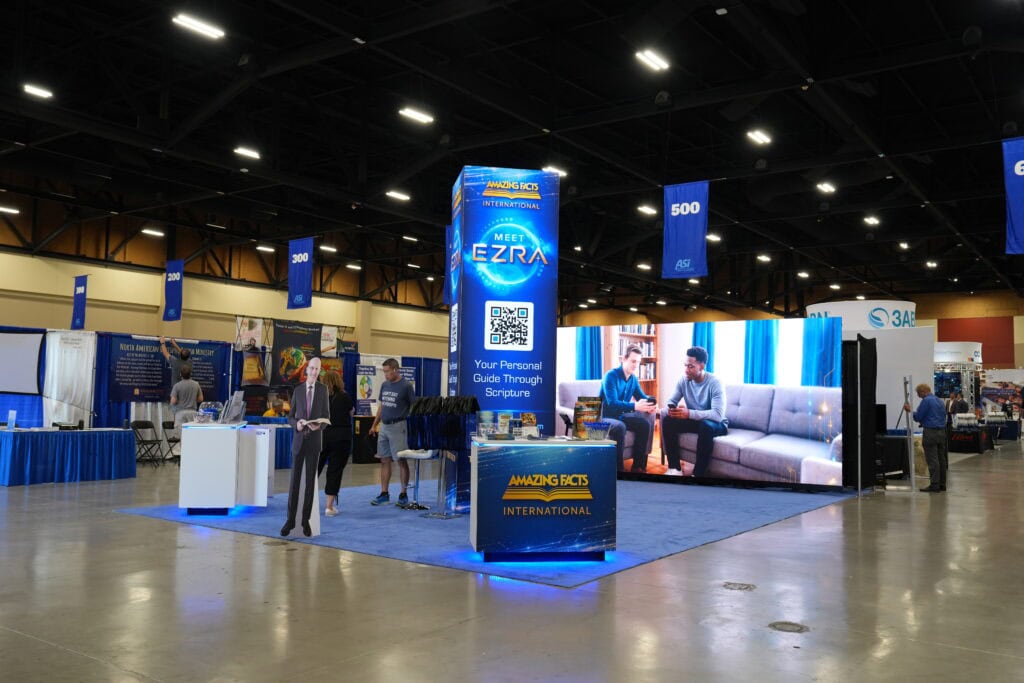
What does it take to migrate a massive ministry with thousands of pages and over 5,000 videos to a new platform? Luke and Adam sit down with Eric Kippel, IT Director for Amazing Facts, to discuss their journey from a decade-old legacy system to the robust ecosystem of WordPress. They explore the strategic thinking behind the move, the importance of hiring enterprise-level experts, and how the new platform will streamline content delivery across websites and apps. Plus, a look at the bleeding edge of AI in ministry—from live translation to the challenges of deepfakes.
~
If you have an idea for an episode on the Blue Vineyard Podcast, Contact us at [email protected]
Do you offer services in the Adventist Ecosystem? Connect with us on LinkedIn
Or, perhaps you need some digital services. Find out more by visiting our website now. bluevineyard.com
Episode transcript 7,271 words
Welcome to the BlueVignette podcast, where we explore the Adventist digital ecosystem. I'm Luke Farooja, co-founder of BlueVignette, and I'll be your host. In each episode, we'll sit down with different leaders and uncover their insights, hear inspiring stories, and get their hard-earned wisdom to share with other ministry leaders. On today's episode, we have Eric Cappell.
He's the IT director in Amazing Facts and has been for a really long time. He's seen many technologies come and go over the years. And so he has a uniquely broad perspective about how technology and ministry overlap. I know you'll enjoy this episode.
So without further ado, here is our interview with Eric Capelle. Hey, everybody. Welcome back to the Blue Vignette podcast. My name is Luke and Adam and I are here with a very special guest today.
Welcome to the show, Eric. Nice to be here. Thank you. Great.
So Eric works for Amazing Facts and Adam is actually our initial connection with Eric. So Adam, I'm going to let you introduce Eric properly. Yes. Well, thank you so much.
It was a dark and stormy night after our kids were in a music program. Eric, I think that we were talking after church, we were getting ready for potluck and you and I started talking and we got into the topic of WordPress and what you do. and the struggles that you have had. So I'd love if you would kind of first do a quick introduction, your background at Amazing Facts. And then I am excited to jump into what you're doing now with Amazing Facts and kind of where you're headed.
So yeah, a little bit of background on you and Amazing Facts. Yeah. Yeah, I think we met, like, we were grumbling because we didn't know where our kids were. And so we were just like, where are our kids at? and yeah so yeah so i think we just kind of connected we realized there's two geeks here and so yeah geek stuff to talk about and yeah so um i've been working for amazing facts since uh november of 2000 and so i'm coming up on many many years here at amazing facts Genuinely, you do not look old enough to have been working there that long.
Like how is that possible? I'll give you I'll give you a tip later started when you were 12. Yeah Yeah, the story is Samuel I was just My parents just brought me off here and been here ever since but yeah I started as network administrator and then my boss at the time moved over into donor developments and I was had the opportunity to become the IT director and somehow I've lasted all these years and and implemented many, many different systems from donor management systems to content delivery networks to upgrading websites to managing a very small team and doing a lot with very little. And so it's kind of how you do things at a nonprofit for the most part.
There you go. Yeah, that's exciting. I'm so glad we couldn't find our children together and we're able to bond over that. And we started talking about some of the struggles that you have.
You have seen amazing facts grow and change and its web presence. I mean, the internet really wasn't that old when you started doing it as far as people utilizing. What was some of your first experiences? um with amazing facts and the media that you were creating and a web presence where how did you guys start? Uh, you know, so Funny thing you was is um, I went to sacramento central church where pastor doug bachelor was You know the the senior pastor for a very long time And I literally started streaming online You know our church service like we were using uh some windows media server, I think.
You know, we had Flash back then, and yeah, it was a very early on thing. And so we just, you know, we were doing media, but then we started taking it to the web. And that just sort of grew and grew. And, you know, there's, I don't know, maybe a thousand, two thousand people now tune in.
So now there's two churches, you know, so Sacramento Central still. has an online presence, they're still streaming today. But then of course, Granite Bay Hilltop Church, they stream with the latest and greatest technology. So yeah, once you, obviously once you start streaming, then bandwidth becomes an issue and we've just, you know. moved along to different providers for that. And we had our own server.
Then we moved to a different CDN or content delivery network. And I've been through three or four of those over my time. So what is the current tip? What is the current choice of bandwidth provider?
Our current provider... We're in the process of moving to a new provider with our new WordPress implementation. And we settled on a company called Zype, which was bought by a company called Backlight, not that too long ago. And that's kind of the...
So when you're shopping for, you know, you got to deliver video, but then there's also this concept of OTT over the top. And what that means, it's video delivery plus apps. So that's kind of our goal is to have a Roku app, a Samsung app, an LG app, iOS, Android, Google TV, Firestick, all that kind of stuff. So that's one of the reasons why we went with them.
Isn't it hilarious how we've gone from a time where everybody was like, oh, there's all these different providers for these services. And then we're like, oh, now we have the internet. So everyone has just got one thing. And then we quickly went back to not one thing anymore.
Now it's all democratized. And now there's like 500 different services that you need to be on. Yeah. And people always tell me, why don't you just make an app for that?
Well, having an app is like having a child. because it requires constant attention, constant updates. Apple will release a new iOS and it'll break your app. And yeah, it's just this constant thing. And I personally don't want to deal with that.
So I hired a company that that's their problem. It's a smart thing to do. Nice. Yeah.
I just put in a help desk ticket. Hey, this isn't working. Fix it. Fix it.
Broken. Um, so when we were standing there, talk around, looking for our children, being good dads, uh, you were talking about some of the struggles that, that you had and we ended up coming up with a solution and we're going to get to that in a little bit with 10 up and WordPress. What were some of the struggles that you have had along the way as amazing facts has, has scaled? What were some of the things that maybe people wouldn't normally think about?
Like, oh yeah, you just have a website and you send out emails and you stream stuff. I can do that. What were some of those, as you get to scale, things that people may not normally think about? So back in the day, back when I was just starting out, you had a server. that server belonged to you and that server lived in a location.
Eventually, you start moving into data centers, but then that server is yours, so you got to be responsible for updating it, security stuff. Something goes wrong, there's no one to call, you just got to figure it out and you got to read all kinds of stuff. We started with that and then our stuff was located in the data center. I know the guy that we were paying the bills to, he called us up and said, hey, you got to come get your server.
They're shutting me down. So the guy I was paying wasn't paying his bills. And so my network administrator, Dan Andreas and I, some late Thursday around eight o 'clock, we had to drive down to South Sacramento and go grab our stuff and then move it someplace else. But now technology has come along where everything is virtualized.
Everything is a service. There's less things that you need to worry about. And so that was one of the things was I wanted to get out of the server business. So it's kind of funny, like the owner of 10 Up, I gave him a tour and I showed him our server room and he's like, I haven't seen a server in like 10 years.
So it's sort of interesting. There's this separation of dealing with the hardware and the operating system and all this kind of stuff. And you just let that be someone else's problem. And so that was one of the things that sort of prompted me to start looking at WordPress and to get away from...
Microsoft's IIS platform and all that kind of stuff. Yeah, I think that the internet has definitely been this thing where you can have just a computer at your desk that's running your small little website and that's still a thing that you can do to this day. I think a lot of it has to do with like, where do you want to spend your time and your resources and what is the best use of your time and energy? And as Amazing Facts has grown, there were definitely some of those growing pains where the current system you had, was it kind of difficult to make updates and changes to the website and what were some of those pain points?
Yeah, so Amazing Facts, I think we get about 170,000 users a month to our website. And every now and then, we'll do some big promotional type thing. And so with that, and then, of course, being on a Christian media ministry, we may attract some bad actors, which we have in the past. And so...
So now security is obviously a big concern and the traffic and Google really, really cares about performance of your website. And so the fact that I pay one company to host two servers, we have our web server and then our SQL server. And then I pay another company that provides a cash access to it. So it's a website acceleration platform.
Same thing that Tik Tok uses, which is kind of funny. Yeah. So, so, so that's the company we use for that. And then there's firewalls that you've got to manage.
And so there's, there's all this, this technology that goes into like serving a webpage. And then of course we've been using an older system that is not widely supported or used on the internet, which on one hand is kind of a blessing because it's hard to hack stuff that nobody uses. Security by obscurity, right? Yes, exactly.
And I think the Lord has really blessed us with that. And then I have a very talented web developer, Shamika, who's done a wonderful job with this system. And you go look up our page scores, Is it called page speed insights? It's a kind of a Google thing We're in the 90s.
We're doing very well there, but along the way we started looking at The things that Google cares about and we started an SEO or search engine optimization Plan that we we had a consultants come in they looked at our website. They looked for things that we can do better They gave us a list of suggestions and a lot of these suggestions we're frankly a little difficult to do with our current system. And I think that's really what sort of tips me over the edge into thinking, is my platform working for me or am I working for my platform? And that's where I went down this rabbit trail.
I started looking at the latest and greatest technology. Headless CRM or no was it called headless websites and serverless this and yeah I was looking at this stuff and I was like, oh, this is so cool. We need to do this But once you go down that path you start thinking oh I have to build everything Like literally everything and I think I was in this process of doing research I even hired a guy to try and implement one of these things. And I gave him about, I don't know, six to 10 weeks.
And then when he showed me, I was like, oh, this is not great. So I realized, OK, so this gentleman's not going to work out. And then, yeah, I think that's when I bumped into Adam. he knew a reputable WordPress agency, and I thought, well, if you have someone that has a good reputation in your corner, it helps a lot, right? Yeah.
They've got the reputation somehow, right? Yes, exactly. Yeah. And then you start digging into some of the stuff they've created, how big they are, how they operate.
And of course, when Adam recommends somebody, you've got to pay attention, right? That's right. It is funny how like, you know, things lead to each other and I got connected into the WordPress space and ended up being living nearby this founder of 10 up and 10 up for those that are deep into the WordPress agency space, you know, they've done huge websites for like, for the California DMV and for like, They've done like the White House. It's just like big, big enterprise websites.
And it's like, well, if they can do that, then amazing facts is probably in pretty good hands. Yeah. As an organization, we take inspiration from what Ten Up does. We pay attention to what they do.
And I think a lot of people do, that they don't just have a good reputation with their clients. They have a good reputation in the industry. Right. So, yeah, it was a great decision, even though I was not a part of it at all.
Well, thank you for the validation. How long were you using the previous platform? You said you got to the place where you're asking, am I serving the platform or is the platform serving me? How long were you on the previous system?
I don't know, 10, 12 years. We've been on it for quite a while. Did you have multiple redesigns through that time or did it have a fairly consistent thing and you just rode that train the whole way through? Well, yeah.
We went from an ASP website to ASP.net and then we're on the Microsoft stack and so that's how we found.NET Nuke. And then we have done multiple iterations of.NET Nuke as far as, once we got on there, we kind of came up with this idea of, we called it the Uber database, where everything was sort of centralized as far as all of our content, and then it would feed out to other websites. And so it was fairly sophisticated. But, you know, with that sophistication, you need to have a lot of technical expertise and, you know, like, oh, I got to update, you know, I got to install this Windows update.
Oh, the server won't boot now, you know, stuff like that was just like a constant thing. And then, of course, you know, applying, you know, security updates and staying fresh and then making tweaks to this and that. And so one of the things that really started to hit me was like our URL structure was very, I don't know, it was IDs and there wasn't a lot of words up there. It was just a lot of gobbledygook type stuff.
And then, you know, there's some words up there, but. But that's something that Google's interested in. They want to see this. They want to see words up there.
They want to see structure that needs to be neat and tidy and all kinds of stuff like that. And so when we started thinking about fixing these things, that's when I was like, well, maybe this is the time to start looking someplace else. And the funny thing is I've been managing a WordPress website for... I don't know, 10, 15 years.
And I'm by no means a web developer, but my level of skill is I find a pretty theme, I replace the pictures, I add the content, make sure the forms work. That's the daily struggle that I've had with it. And that's enough for like 90% of the people out there. But Amazing Facts is a very different beast, right?
Yeah. So one of the things with Amazing Facts is we have about like 5,000 videos and audios. We have our Bible study guides. We have a lot of materials on there for free.
So we sell these like little pocketbooks and then you can go read them on our website. And so a lot of traffic comes. We have a daily devotional, for example, that we send I think it's like 1.3 million emails a month. Wow.
That's huge. Yeah, so we have these lists of like 100,000, 50,000. So once you start sending like every single day, those numbers like go through the roof. And so, yeah.
And then, you know, there's obviously... So one of the things that Google cares about for whatever reason is your website has to work really good on like an iPhone 5 They expect your website to be delivered fairly quickly on a 3g network Wow in the middle of nowhere and and and so yeah that kind of stuff and so So this so WordPress from you know, it's There's safety in staying with the herd, right? Like when you're blazing a trail with brand new technology or limping along with old technology, there's less support, there's less of an ecosystem to provide you what you need and to get done. And that's one of the beauties of WordPress is...
You're not as unique as you think you are. There's literally probably a plugin out there that can do what you need it to do. So like one of the things of we've been we had a meeting today talking about Sabbath mode on your website. We don't want to try and promote the sale of products on the Sabbath.
So, Adam found a Shabbat mode. Jewish people have been dealing with this for longer than we have, and they've developed a lot of stuff that we can tap into. Yeah. No, it is so interesting.
The WordPress ecosystem, and there's so many people that are contributing to this open source project. Are there any, were there any, um, pleasant surprises or any things that were different than you expected when it comes to migrating a site as big as, as amazing facts over to WordPress? Um, I'm glad I hired 10 up. Let me just put it that way.
Yeah. Cause you know, transforming your database, uh, to You're dealing with Unicode, different characters. There's a lot involved in transforming lots and lots of data. And so I'm glad that we hired professionals to handle that kind of stuff.
I know what they're doing. I know this is a very... Super specific question. So if you don't have the actual number in your mind, that's totally fine.
Don't expect you to, but just curious. Do you have a sense of like how many, I don't know how it would be measured in either like number of pages or like whatever in, in the site that had to be migrated? Like, do you have, have a sense of the scale? Yeah, I think, um, I think we're somewhere around like seven to like 9,000 pages.
Yep. Someone there. whether or not all those pages really needed to be migrated? Do you really need to see 20 years of appeal letters on the website or some of this kind of stuff? But Amazing Facts has been around a while.
So we've been putting out magazines, we got blog articles, news, events, all this kinds of stuff. But one of the big things that a part of our project is probably adding to the expense is, this union between Zype, our CDN and WordPress. And so one of the frustrations that we had here was the way that we integrated what we call our media library to our CDN system. And you had to do things in two different places and sometimes. our media people would try and upload like a seven gigabyte file to our web server, which then had to get uploaded to the CDN.
And so that doesn't always work well, that kind of stuff. And so that was one of my goals was to try and improve the workflow of our media team and that kind of stuff. So what does that workflow look like now in the new version? So now in the new version, Zyp has a library. and the goal is for the media person to upload to Zip.
It'll just automatically flow over to WordPress. It's so funny, some of the simple things that I'm excited about are, so I'm going to have a playlist, a collection of videos that I'm going to call it latest videos, and a user can basically check a box and that'll show up on the Roku app. on the iOS app and on the homepage of AmazingFacts.org. And so just one simple little click and kind of the idea too is, you know, Amazing Facts, we produce a lot of videos and I don't know if we do a great job of, you know, like we'll collect testimonies and maybe the donor development team will send out one email, but... you know, why can't you come to the home page of MazeFacts.org and see that latest change live story or, you know, hear about the latest documentary that we're creating or whatever, you know, that kind of stuff. And so, and then also one of our goals with WordPress is, you know, like, you know, the internet runs off of ads, right?
Like, the whole internet is based on clicks. And a lot of time with our websites, like, we just share the content. you know, here, read this. And that's it. That's all we say.
It's like, here, read this. And so one of the goals with the website is being able to, you know, dynamically have different call to actions. You know, like, here's our daily devotional, but hey, have you subscribed? Or, oh, by the way, we have a new Bible training program coming up next month.
Have you thought about helping us with this latest project or whatever that kind of stuff? So that was one of the big goals was to incorporate opportunities for engagement. So, aka monetization. That's the industry term.
One thing that's been interesting for me is as I've gotten to know the, you know, amazing facts better and like all the things you're doing. Um, you know, you were sharing some of the struggles you were having. All right. WordPress seems like it could be a fit to solve some of those issues, but amazing facts definitely feels like it's pushing the envelope of technology.
What's coming next. Um, what are some of the things that you're excited about? We've talked a little bit about AI and some of the different things that Pastor Doug is doing. Share some of the things that you're looking forward to, or kind of the bleeding edge things that you guys are already working on.
All right, well, I still have scars from what we did last week. So, okay, so last week on Monday, the media team came to me and said, hey, we want to take the live stream and translate it into eight different languages live. And so I had to call up Zyp and say, hey, I need eight, I actually asked for nine or maybe, I think I asked for 10 encoders set up just in case they throw more languages at me. So they were able to set up these encoders and then we use, so basically we have our studio, we send it off to, This may be an industry secret at the moment, so I don't know if I can share this, but we sent it off to a company.
They digest that and then they translate it into nine or eight different languages. And then from there, we send it off to ZEIT, which then from ZEIT, we're able to embed to our website. So if you went to afyouth.com, you could click on Korean and there's the program in Korean or Portuguese or Indonesian or... I don't remember what all the languages were, but it's pretty wild.
I mean, it's a pretty cool service in that it takes Doug, Pastor Doug or whoever the speaker was, and it kind of uses their voice and it changes it into that language. Also, it's not even just like a dubbed voice. It's like similar to their voice. It's actually their vocal pattern.
Yeah. Oh, that is wild. It is pretty cool. So, but one of the drawbacks was, it's so funny, like, you can't impress a 14-year-old.
So, I was showing it to my son, and I was like, hey, check this out. Here's the speaker speaking Korean, and then the slide comes up and it's all in English. He's like, well, how come it didn't translate the slide? He's like, come on, man.
This is amazing! This is literally we're translating on the fly It's like maybe a 30 second delay or something like that in like eight different languages But we're living in the future here. Come on. Yeah, I know it's still still not enough to impress a 14 year old.
Yeah, so Yeah, so that was one of the cool things and then and then that's obviously one of the one of our priorities with the new amazing facts org is is trying to make it more accessible in more different languages. And WordPress, from the very beginning, it was designed to work with multiple languages. That was part of, I don't know if it was built by Europeans to handle all their languages, but it sure seems like it. So it's literally the best system out there to handle different languages.
And then, too, that was one of the reasons why we went with Zyde was that if a Spanish user fires up the Roku app, I can show them Spanish content. So it's kind of neat. It can do language-based content or even regional-type stuff. So that was a nice mesh of similar... requirements and capabilities between WordPress and the website's capable of doing.
Very cool. As you know, like I said, ministries are paying attention to amazing facts. Are there any technologies that you guys are staying away from? Or like, yeah, that's probably not where we're headed.
I'm curious. As much as what we do, it's also what we don't do. Anything that you're not doing that you guys have been weighing and like, yeah, let's stay away from that. Well, AI generated contents is a two-edged sword.
So I kind of led the charge of using it. But the funny thing is we had a worship talk this morning where there was a lot of concern about it. So that's pretty interesting. Concern as in like from an ethical perspective from a legal perspective from like what what end I hate to put words into this person's mouth, but I think the the issue with AI is You don't really know where it's gonna get its content from to provide the answers that you're asking it and and so I I found a particular solution where we could upload our contents.
And so one of our wonderful ladies over in our correspondence department, she's been doing this job longer than I've been here. So she's been here 25 plus years and she has this letter library of stuff. And so she filtered through it. She took out all the stuff that you wouldn't want the AI to talk about.
And so she filtered that down and then we added, Volume one and two of the best of Bible answers live and this and that and we pointed out our websites and now you can open this thing up and Our court are the leader of our correspondence department He he took what I the foundation I built and then he tweaked it and it's so funny because you can sort of control the persona And so his persona is like, you are a Seventh-day Adventist pastor who, da-da-da-da-da, warm and friendly and encouraging, and he sort of built this whole thing, and this tool, you just ask it a question. It really delivers a wonderful response. It's kind of mind-boggling how, it's like witchcraft. It's just insane how well it did.
Like I asked it the most Adventist question I could think of, which... Paystacks, Big Franks, or Lincoln's? I should try that, actually. That'd be interesting.
But I think I asked it, like, why is the Sabbath the seal of God? That's a better question than mine. In my perspective, the most obvious question you can ask. And it nailed it.
It got the right answer, and I asked it, okay, how can I get a free Bible? What happens if you kill yourself? What day am I supposed to go to church? Beautiful letter, three random things.
So that's something that I'm hoping that we can unleash on the public at some point. Obviously, one of the things that we're sort of dealing with, this is nuts. Just yesterday, I watched a video of Pastor Doug promoting, it was a 30-minute video. of Pastor Doug, his likeness, his voice, and he was selling you this Japanese spice that helps prevent Alzheimer's. Oh no. 30 minutes of this.
That's a long time. Yeah. And the funny thing is, is by the time it was done, I was ready to buy it. Like I was sold.
Who's doing a miracle? 30 minutes. Cause I know that, you know, with some of the models you can get like these six second, you know, like short things, but 30 minutes. I'm curious how that was. And then they were weaving in.
I mean, it was, it was pretty crazy. Like how, but you could totally tell that it was an AI generated thing for now. Today. Yeah, right.
Yeah, exactly. Sorry, I was just going to say, I remember when this first started happening with Joe Rogan, where people were using his likeness and they were using it to sell products. I remember there was this big thing about it, this legal blow up about it because he's endorsing a scam product. We look at that as a consumer on the internet and we go, oh, that's interesting.
But when you think about that in a spiritual lens, what happens when these are good enough to be impossible to tell the difference and you've got people using their own hobby horse doctrines and they've got it behind past Doug's face? It's a scary thing. Are you guys thinking about how to mitigate for those kind of problems? Actually, I was hoping you could tell me how to get those.
Yeah, it's funny. We were just thinking like, like, what do we do? I mean, I always can. I don't know.
From my perspective, there's nothing you can do other than because I was thinking like, look, hey, look, if I send out an email to all my donors saying, hey, don't buy the Japanese spice. They're gonna like what Japanese spice they're gonna go watch the video and like it worse feel compelled to buy it Yeah, so I'm helping the guy out by drawing attention to it. So I I really don't know I mean, I think I think the thing you can do is just address if someone contacts us All we can do is be that wasn't done. Yeah Well, I think the thing you can do is make sure that the content that you're putting out on your channels, one is easy to find that it is truly like, yes, this is the Amazing Facts channel.
And the content that you're putting out is consistent, easy to find. And they can say, oh, well, yeah, that wasn't that AI spice from Pastor Doug that wasn't put out on the Amazing Facts channel. And I'm going to trust what is on the Amazing Facts channel and everything else I'm going to be skeptical of. How do you train that?
The octogenarians out there, they don't think this way. They weren't born with this skepticism. It's true. I do think that there's an area of education and just as time goes on, the people will learn.
I think there is a technology solution for this. I just don't think it's ready to be deployed broadly yet. And I think the answer to this problem is blockchain. Because I think if we can have a union of content production and blockchain, then we can have...
What's the word I'm looking for? Validation. Yeah, a validation, right? And so perhaps that's something that YouTube or like any of these media providers would have access to this blockchain system.
So anything that is showing past a Doug would have like amazing facts of verification badge on it that can only come from the blockchain, which is impossible for anybody to tamper with. Like, I think that's where this is going. But I think that's why name, image and likeness is an interesting field for legal study right now, because before it people had that but it wasn't. They couldn't use it.
But now, hypothetically, you know, Pastor Doug could be preaching new sermons. Like, you know, if if Jesus hasn't come back yet, right, 100 years from now, there could be new sermons being preached by the name, image and likeness of Doug Batchelor, which, you know, amazing facts could have the rights to use his image for that. Whereas this is this is a time where we've never been able to do that before. So the rights to people's. influence is going to hinge on who has the validation for those name, image and likeness.
And so I think that's a space that as a church, we're probably going to have to play into a degree if we're not going to be outpaced by competition in other areas. I heard someone tell me once that blockchain is the solution looking for a problem. Maybe you found the problem. apt description, by the way, like I think all virtually all of the things that blockchain has been used for so far are irrelevant, almost all of them anyway. And so yeah, absolutely.
But I think there are genuine use cases that are going to come. You know what I think what scares me though about that potential idea is you're taking away anonymity from the internet. And so like in China, for example, you know, you have to have a permit to put anything on the internet. like you have to have the registers like your videos have to be tagged with a certain so so we we kind of run into some of these kinds of things and it's like you can't just have a domain and be anonymous in China and so so if we start i don't know be really easy to flip that switch off you know at some points uh but i think we all know it's coming at some point but yeah But we don't want to hurry it along, right? Right.
So back to WordPress, that's kind of one of the reasons I liked about WordPress was this idea of I can hire a WordPress hosting company that specializes, that knows WordPress better than anybody and how to host it properly. But the flip side, I could install the plugin and download it. to my own server, you know, every night. And so, and then I could deploy it to like five other places or something like that. And so, you know, back, I'm old enough to remember when we used to pirate contents instead of pay for it.
A little wine wire. You know, Napster, Pirate Bay, you know, all this kind of stuff. And I've always, I've always thought about at some point, like how did Pirate Bay do it? Like they, they, they're still running as far as I know, like they just keep on going.
And, you know, as, as, as you create religious programming that may not be popular someday, you know, how do we keep it? How do we keep our content out there as long as possible? So that's a good point. And one of the big things that makes me an advocate for WordPress is that you know, if you put all of your stuff on Facebook and everything, you know, you, you build an entire ecosystem and community on Facebook and then Facebook changes its terms or tick tock gets shut down or whatnot WordPress because of what it is and how it works being open source, it can't get shut down.
Like you actually have it and can have it on your computer that I think, especially when you talk about liberty, that's a big deal. Right. Yeah. And that's kind of the You know, as IT transforms into running off of services, we always need to have like a backup plan.
And I know that within the Semper Aventus leadership that, you know, they think about this stuff and they're... Even though I'm sort of on the edge of this, somehow I got on these emails. So I know what they're talking about. But they're talking about creating their own CDN.
They're talking about creating their own large language chat bot kind of stuff. And it's pretty neat that we have part of a group that does that kind of stuff. No, I think you're right. I think it speaks to... the place that Amazing Facts has in this larger Adventist ecosystem that it is important.
Yeah, we were talking to Brent Harding recently and they're moving, I don't know, Luke, how many was it? 5,000 to 7,000 websites over to WordPress. It's good to see that, like, no, we need to own this stuff and it can't be on a proprietary platform. Right. Yep.
So, very cool. As we're starting to wrap up, again, we started out with amazing facts, recognizing that it was time for a shift. Moving to to WordPress and some of the things as of the time of this recording that website hasn't launched yet I know that that'll be happening. Hopefully fairly soon These projects have never in a straight line.
It doesn't doesn't feel like but that it's coming and it's exciting to see what Amazing facts does and then as we're looking at AI and all of those potential things in the direction As we wrap up, is there anything that you would like to speak to someone who is running an Adventist media type of site, someone who is using technology to try and grow their ministry, whether it be small or large, any words of wisdom that you want to share? Words of wisdom. I know a lot of times, a lot of times people will want a website. And then I think initially you got to figure out what is your goals?
Like what does success look like? And you have to come up with this cerebral list of things before you start picking colors and pictures and all this kind of stuff. And so that's kind of what my process is. Obviously, you want your content to be found and you want to design stuff in such a way that Google likes it.
And one of the things that I've noticed over the years is that for whatever reason, Google loves WordPress. I don't know why, but it does. And so that's another reason. And boy, other words of wisdom.
At least, you know, sticking with the herd, you know, with WordPress, the beauty is there's people out there. There's Adventists that know it. There's Adventist companies that can support it. There's lots and lots of talents available out there.
So, yeah, it's just... When you make a decision, think about the ecosystem. Think about, you know... If I leave, who's who's going to take over this website?
Or if I lose my web developer, who can step in or who can fill that gap and that kind of stuff. And so so yeah, I like it. Good advice. Well, on that, I think that's that those are the things I really wanted to cover.
Luke, was there anything that I missed that you were just dying to ask? Uh, no, I think that, I think that covers it well. Um, I, I really, I've really enjoyed hearing the thinking behind it because in, you know, in my role in, in our company, I talk to people a lot about, you know, what they want us to build for them. And I think I've lost count of the number of people that say, and I say, you know, what, what would you like this?
Do you have any inspiration for us? And they go, go and look at the amazing facts website. Like we, we want it to be like that. And, you know, usually I have a conversation with them after that of, okay.
Do you have a budget like Amazing Facts? Are you willing to truly invest in this solution? I say that to express that what you've built is something that is truly valuable and it's admired by a lot of people that are in the broader Adventist community. We look at that as inspiration for even our customers as well.
So there's a flow on effect from the decisions that you guys make. And I appreciate that you've always made those decisions with that diligence and integrity and doing the best for the gospel. Awesome. I'm humbled.
Thank you. Eric, anything you'd like to add, anything we didn't ask that you'd like to share about your work at Amazing Facts? I will say this you should not try and replace your donor management system and your websites and Your online fundraising system all at the same time the same time ready go try try just don't do that I got more gray hairs every day because of some of these poor decisions I made. You probably shaved mine off.
Don't bite off more than you can chew, that's for sure. That's good. Very cool. Well, thank you so much, Eric, for taking the time to share the incredible work.
I can't wait to see how everything turns out with Amazing Facts and the new website. Maybe we'll have you back on soon to see how it all has turned out. But for now, I think that's going to wrap it up. All right.
Thank you for having me, guys. All right. Thank you. Great.
Take care. Thanks for joining us for this episode of the Blue Vineyard podcast. For more episodes or information about our services, please visit BlueVineyard.com.
Transcript is automatically generated and may contain errors.